
Travel Rule in Practice: Key Takeaways From the Live Session
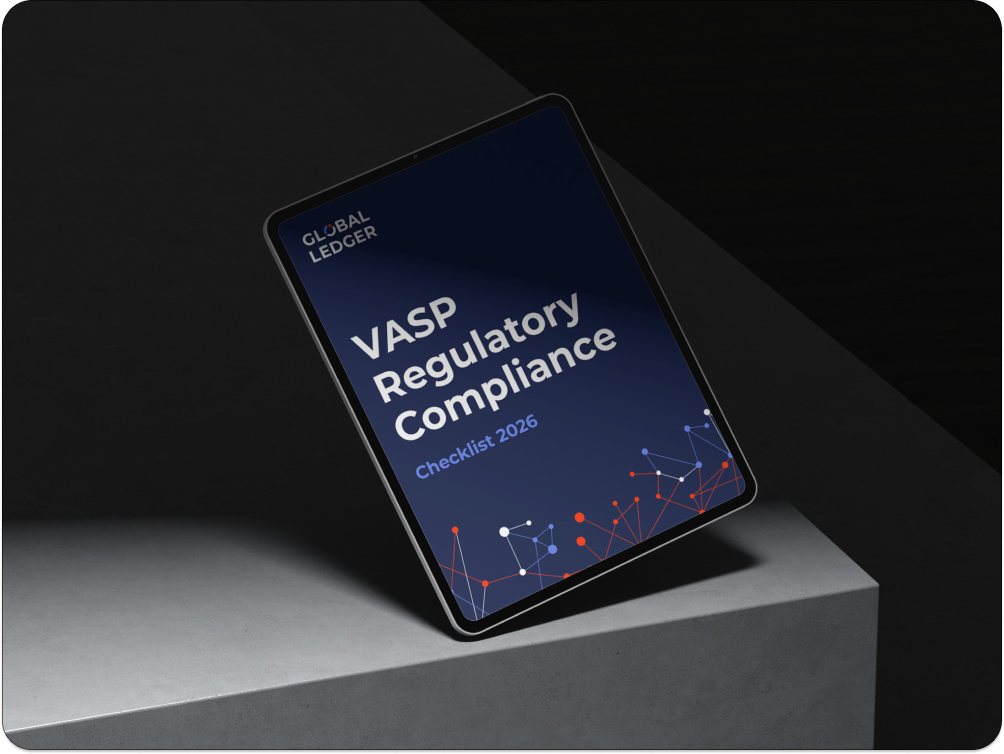
VASP Regulatory Compliance: Checklist 2026
Get the latest 2026 crypto regulation updates — from MiCA and 1099-DA to the Travel Rule — with a compliance checklist inside.
ARE YOU READY FOR THE 2026 REGULATORY UPDATES?
Global Regulatory Snapshot
An overview of key regulatory updates 2026 in the EU, US, Switzerland, and 7+ other jurisdictions.
Ready-to-use VAPS Checklist
Licensing, AML/CTF, crypto Travel Rule, reporting, crypto tax, and security requirements you can act on immediately — mapped clearly for 2026.
Key 2026 Deadlines
MiCA, VARA, DAC8, 1099-DA, GENIUS Act and more — all major cryptocurrency regulation dates and obligations in one place.
Risk & Compliance Priorities
Regulatory expectations, monitoring priorities, and the controls compliance teams need to strengthen in 2026.
GLOBAL LEDGER COMPLIANCE INSIGHTS
Travel Rule in Practice: Key Takeaways From the Live Session
Global Ledger at MERGE Madrid 2025: Key Insights
Global Ledger’s Key Insights from September–October 2025 Events
FAQ
What is Global Ledger?
Global Ledger is a Swiss blockchain analytics company delivering fast, end-to-end AML compliance and investigation tools. Founded in 2019, we support over 2,000 digital assets and manage a database of over 700 million attributed addresses, updated daily. We perform 250,000 AML checks and monitor 30 million wallets every day. With an average response time of just 500ms and private server deployment options, Global Ledger combines speed, scale, and security.
Which blockchains does Global Ledger analyse?
Currently, the following blockchains are supported:
- Bitcoin (BTC)
- Bitcoin Satoshi Vision (BSV)
- Litecoin (LTC)
- Ethereum (ETH), including top tokens
- Tron (TRX), including top tokens
- Binance Coin (BNB)
- Polygon (MATIC)
- Arbitrum (ARB)
- Base (ETH)
- Avalanche (AVAX)
- Moonbeam (GLMR)
- Polkadot (DOT)
- Solana (SOL)
- TON.
How is the GL Score calculated?
The GL Score is a number from 0 to 100 that shows the degree of risk: low, medium, and high. Each score is represented by a corresponding color: green indicates low risk, yellow indicates medium risk, and red — high risk. The risk score is derived from the assessment of the riskiness of sources contributing to a requested address or transaction.
To calculate the score, the algorithm analyzes incoming transactions, assesses the risk of identified sources, and calculates a score on a scale from 0 to 100. This score provides an indication of the potential level of risk associated with the address or transaction based on the evaluated sources and their associated activities. Learn more about risk score calculation from our blog article.
What are your data sources?
The Global Ledger team regularly collects and constantly analyses publicly available information, open data from the top blockchains, replenishes the internal information base by conducting its own investigations, as well as data purchased from reliable vendors.
What if I need help ASAP?
Our support team stays in touch 24/7 to provide clients with the most comfortable service and experience in case of unexpected hacks or cyberattacks. Please send your request with a brief description of your case to contact@globalledger.io, and our manager will reach you shortly.