



Sanctions Screening
We help you detect, investigate, and stop crypto exposure to sanctions issued by OFAC, the Council of the European Union, the United Nations Security Council, and other watchlists before it turns into a compliance risk.
To access our sanctions screening software and strengthen your AML frameworks, please fill out the form.
How We Can Support You
Regulators
- Monitor sanctions-related crypto exposure across all entities within your jurisdiction.
- Detect sanctions evasion patterns across large volumes of blockchain activity.
- Supervise CASP and VASP compliance at high speed
- Support enforcement with evidence-based blockchain intelligence.
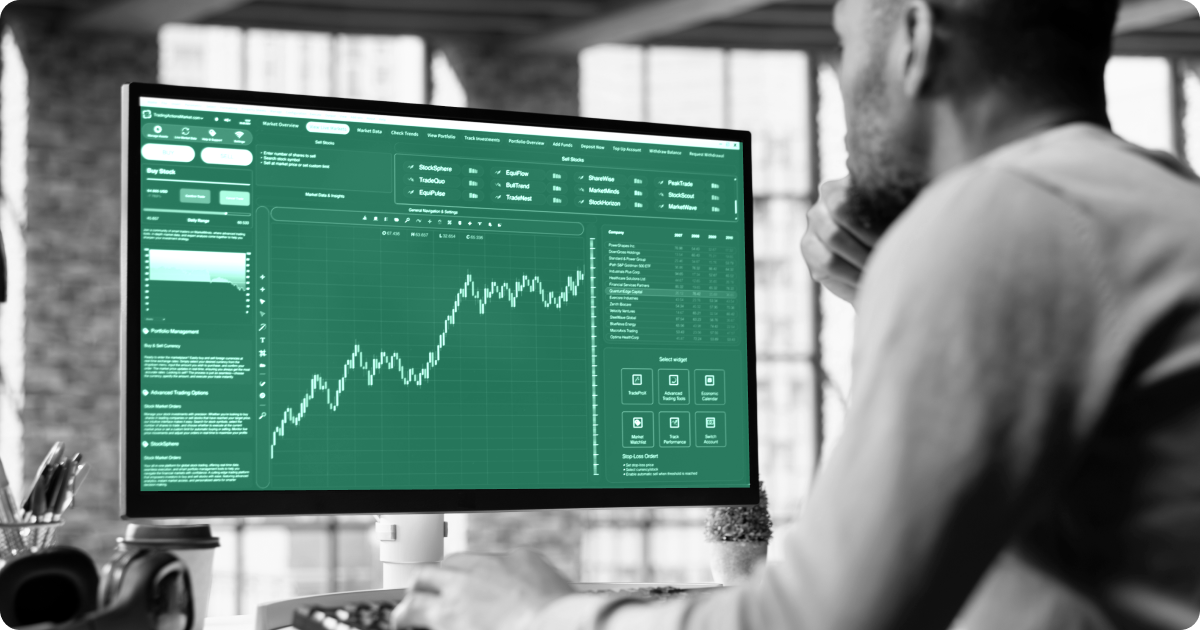
Law enforcement
- Trace and block sanctioned funds faster.
- Identify specific entities behind risky wallets.
- Prioritize high-risk alerts and cases for faster investigations.
- Generate data-driven evidence for legal proceedings.

Financial institutions
- Identify sanctions exposure across high-volume customer activity.
- Reduce sanctions violation risk.
- Improve investigation speed with customizable, prioritized alerts.
- Get complete transaction and entity data for SAR filing or regulatory audits.
VASPs and CASPs
- Detect sanctioned wallets before funds are deposited.
- Detect direct and indirect exposure to sanctioned entities.
- Speed up compliance investigations with real-time risk insights.
- Prove sanctions compliance to regulators and partners.

How It Works
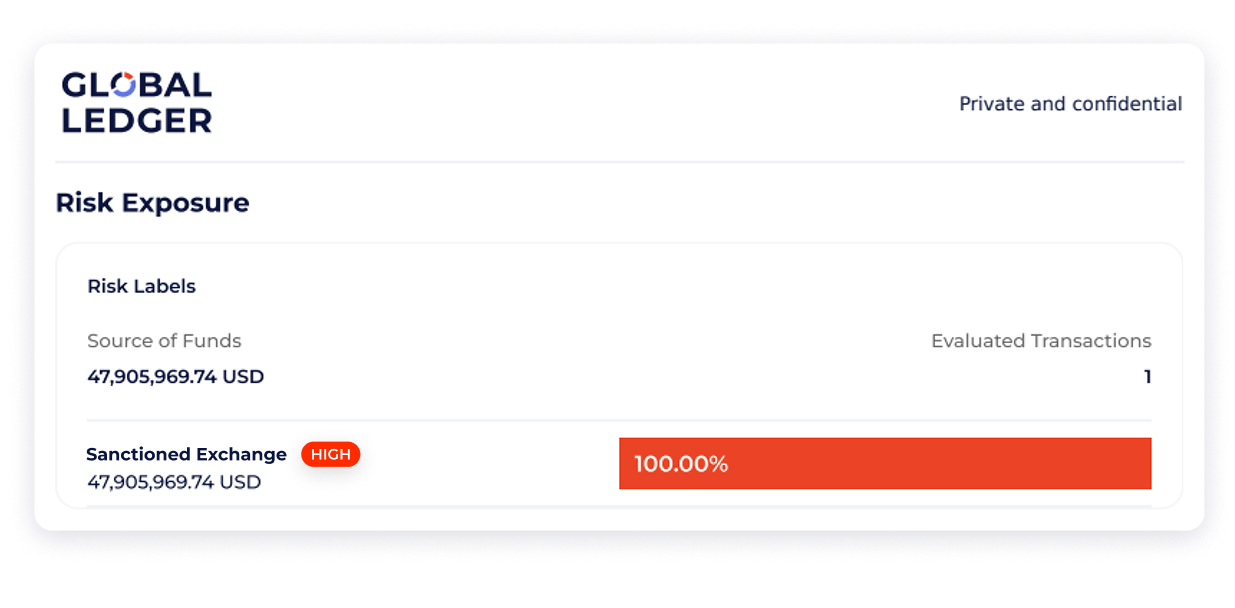
Review counterparty risk exposure
-
Access the entity risk overview for your evidence-backed decisions.
-
Check source and use of funds to spot suspicious flows by entities and risk labels.
-
Get the context required to determine whether the entity needs further review.
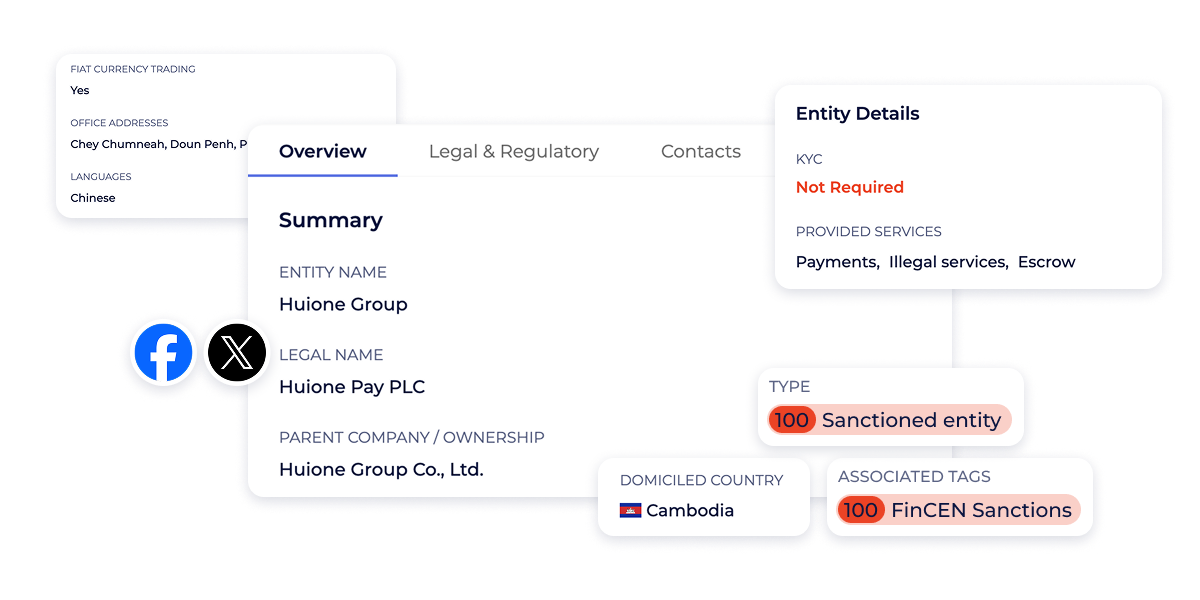
Check the entity behind the risk
-
Open the entity record and review all essential entity information in one place.
-
Check ownership details, operational status, regulatory compliance, licenses, and contacts.
-
Streamline every step of due diligence with actionable insights — onboard with verified data, investigate with full context, and track changes to reassess risk.
Why Choose Global Ledger
Sanctioned wallet addresses
Entities in database
Crypto assets supported
Media Mentions
Grinex Hack Exposed Russia’s Shadow Crypto Infrastructure and Billions of Dollars in Post-Sanctions Flows
Inside the Binance accounts internal investigators say helped transfer more than $1 billion to Iran-linked entities: A 79-year-old VIP Chinese trader and a suspected Iranian gold smuggler
Hackers double pace of laundering crypto loot from exploits
Crypto’s 2-Second Laundering Era: Hackers Now Move Before Victims Speak
Russia Revives Blacklisted Crypto Empire Garantex to Outrun Sanctions
As Crypto Hacks Surge, Ethereum Founder Vitalik Tests New ‘Invisible Wallet’
Crypto bounty hunters helped salvage Bybit’s business
Crypto coin for Russian shadow payments moves $9bn
Russia recruited a teenage spy. His arrest led to a crypto money trail
FAQ
What is Global Ledger?
Global Ledger is a blockchain analytics company delivering fast, end-to-end AML compliance and investigation tools. Founded in 2019, we support over 2,000 digital assets and manage a database of over 700 million attributed addresses, updated daily. We perform 250,000 AML checks and monitor 30 million wallets every day. With an average response time of just 500ms and private server deployment options, Global Ledger combines speed, scale, and security.
Which blockchains does Global Ledger analyse?
Currently, the following blockchains are supported:
- Bitcoin (BTC)
- Bitcoin Satoshi Vision (BSV)
- Litecoin (LTC)
- Ethereum (ETH), including top tokens
- Tron (TRX), including top tokens
- Binance Coin (BNB)
- Polygon (MATIC)
- Arbitrum (ARB)
- Base (ETH)
- Avalanche (AVAX)
- Polkadot (DOT)
- Solana (SOL)
- TON.
What is the Global Ledger Score?
The Global Ledger Score is a number from 0 to 100 that shows the degree of risk: low, medium, and high. Each score is represented by a corresponding color: green indicates low risk, yellow indicates medium risk, and red — high risk. The risk score is derived from the assessment of the riskiness of sources contributing to a requested address or transaction.
To calculate the score, the algorithm analyzes incoming transactions, assesses the risk of identified sources, and calculates a score on a scale from 0 to 100. This score provides an indication of the potential level of risk associated with the address or transaction based on the evaluated sources and their associated activities. Learn more about risk score calculation from our blog article.
What methodology does the Global Ledger Score use?
The GL Score assesses four risk inputs for each address or transaction:
- Entity risk — the risk rating of the entity controlling the address (exchange, service, sanctioned account holder, etc.).
- Source of funds risk — where the funds originate, traced through incoming transactions.
- Use of funds risk — where the funds are sent, traced through outgoing transactions.
- Address risk — risk inherited from the address's own connections.
When tracing funds, the algorithm follows the flow until it reaches a stopping point — an entity, smart contract, or unhosted wallet. If none is found, it steps back through earlier transactions; the number of steps is called depth. Higher-risk sources carry greater weight, and sanctioned entities trigger a high score even on minimal exposure.
The final result is a score from 0 to 100:
- 0–29 — Low (green)
- 30–69 — Medium (yellow)
- 70–100 — High (red)
What are your data sources?
The Global Ledger team regularly collects and constantly analyses publicly available information, open data from the top blockchains, replenishes the internal information base by conducting its own investigations, as well as data purchased from reliable vendors.
What if I need help ASAP?
Our support team stays in touch 24/7 to provide clients with the most comfortable service and experience in case of unexpected hacks or cyberattacks. Please send your request with a brief description of your case to contact@globalledger.io, and our manager will reach you shortly.